


It’s important to know how to talk to a guy in a way that creates a real emotional connection. Some women get frustrated because conversations with men can feel shallow, disconnected, confusing, and one-sided.
She might try to have her conversation and feel like he isn’t fully opening up; he is giving short answers, being distracted, or avoiding deep conversation overall. This can lead to emotional loneliness even if you’re in a relationship with someone you love.
One reason that this often happens is that some women unintentionally communicate with men the same way they do with their close female friends. But the thing is, men and women communicate differently, both emotionally and psychologically.
By understanding these differences, it doesn’t mean that you’re stereotyping men or hiding your personality. It means that you’re learning to have conversations where both people feel valued, safe, heard, and respected.
Even small communication changes can completely change the relationship dynamics.
Communication and Healthy Relationships
According to the American Psychological Association, research shows that communication can predict long-term satisfaction, intimacy, and emotional security in relationships.
Healthy communication creates things like:
- Trust.
- Closeness.
- Understanding.
- Safety.
- Intimacy.
Poor communication, on the other hand, creates things like:
- Distance.
- Misunderstandings.
- Loneliness.
- Resentment.
- Withdrawal.
- Defensiveness.
The problem isn’t always a lack of love, but sometimes couples have never learned how to communicate with each other in a good way.
Communication Breakdowns
You might communicate the wrong way when conversations are surface-level only, when he is giving you one-word answers, and when you are doing most of the talking. This can cause frustration to grow and small issues to escalate fast. These patterns are common.
But these things can improve once communication becomes more intentional.
Men Communicate Differently Than Women
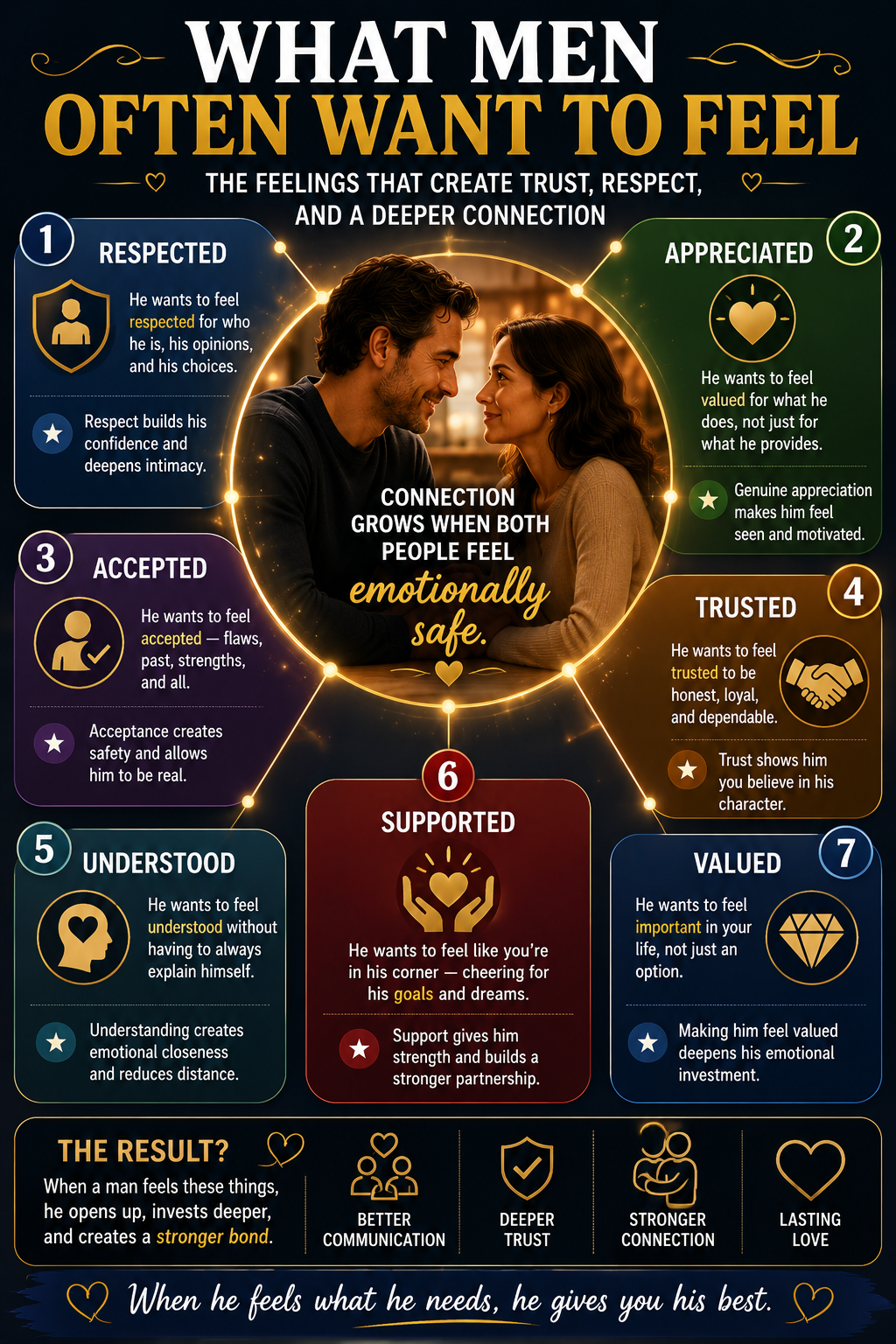
Women usually process emotions externally, and this helps them to organize their thoughts, get rid of stress, process emotions, and feel connected. But men process these things differently, and instead of talking, men like to:
- Pace.
- Use internal processing first.
- Create emotional space in the conversation.
- Formulate their thoughts.
This is one reason that women sometimes accidentally interrupt, rush conversations, or over-explain without even realizing it. When the conversations move too fast, men often shut down instead of expressing what they’re feeling.
Emotional Safety Matters
One of the big reasons that men don’t open up emotionally is that vulnerability no longer feels safe. When conversations consistently feel critical, intense, judgmental, interrogative, and overwhelming, men often shut down.
According to The Gottman Institute, consistency shows emotional safety and responsiveness that are important for healthy long-term relationships. People will normally open up when they feel safe, accepted, respected, and heard, and not emotionally attacked or managed.
10 Communication Habits That Can Help Men Open Up More
Here are 10 communication habits that can help men open up more:
1. Give Him Time to Think
One thing a lot of people don’t realize is that not everyone processes conversations the same way. Some people talk through their thoughts as they’re having them. Others need a little time to think before they respond.
If you ask a question and he doesn’t answer immediately, try not to rush in and fill the silence. Sometimes a short pause gives someone the space they need to gather their thoughts.
Some of the best conversations happen when people don’t feel pressured to respond instantly.
Silence Isn’t Always a Bad Thing
A lot of people feel uncomfortable when conversations go quiet. They might worry:
- Something is wrong.
- The conversation is awkward.
- The other person is upset.
- They’ve said the wrong thing.
But silence doesn’t always mean disconnection, and sometimes it just means someone is thinking before they respond.
2. Ask Follow-Up Questions
One simple phrase can completely change a conversation. Try saying something like, “Tell me more.” Those three words show genuine interest and curiosity. They communicate things like:
- I’m listening.
- I care what you think.
- I want to understand.
- Your feelings matter.
A lot of people don’t get many opportunities to talk openly without feeling judged, interrupted, or rushed. Sometimes just listening can create more connection than offering advice.
3. Let Him Finish His Thoughts
It can be tempting to:
- Finish someone’s sentences.
- Assume what they’re trying to say.
- Jump ahead in the conversation.
- Explain things to them.
But doing that can sometimes make people feel unheard. Instead, allow him the time to fully express what he’s trying to communicate.
You might be surprised by how much deeper conversations become when people feel like they have room to speak freely.
4. Show That You Respect His Perspective
Most people want to feel valued by the person they’re with. And for many men, feeling respected is a big part of feeling emotionally connected. Of course, this doesn’t mean that you agree with everything that he says; it just means that you show value in whatever his thoughts and opinions are.
Simple statements like these can go a long way and can build a stronger connection:
- “I’d love to hear what you think.”
- “What’s your perspective on this?”
- “I trust your judgment.”
5. Support Instead of Correcting
Most people have good intentions when they remind, suggest, or encourage their partner, but sometimes constant correction can start to feel more like criticism.
For example, instead of saying, “You need to take better care of yourself,” you might try saying, “Is there anything I can do to help?”
Small changes in wording can completely change how a message feels, and the goal is to be supportive without making someone feel managed.
6. Say What You Need Clearly
One of the biggest sources of frustration in relationships is expecting someone to know what you need without telling them.
A lot of people think that if their partner cared enough, they would just know what they need, but people aren’t mind readers. Having clear communication works much better than just assuming someone knows. This might sound like:
- “I’d really love to spend more time together this week.”
- “I feel supported when you check in on me.”
- “Can we plan a date night soon?”
Being direct helps reduce misunderstandings and makes it easier for both people to meet each other’s needs.
7. Listen Before Trying to Fix Things
When someone talks about stress, frustration, or disappointment, our first instinct is often to solve the problem. But not every conversation needs a solution, and sometimes people just want someone to listen.
Before offering advice, try:
- Listening.
- Asking questions.
- Validating feelings.
- Showing empathy.
Feeling understood often matters just as much as finding a solution.
8. Pay Attention to Timing
Even important conversations can go badly if the timing isn’t right. It’s usually harder to communicate well when someone is:
- Exhausted.
- Distracted.
- Overwhelmed.
- Stressed.
- Already upset.
Sometimes it helps to say something like, “There’s something I’d like to talk about. When would be a good time?” Giving someone a chance to be mentally present often creates a much better conversation.
9. Notice the Things He’s Doing Right
A lot of couples spend so much time focusing on problems that they forget to acknowledge progress.
When he does these things, say something:
- Opens up emotionally.
- Communicates honestly.
- Makes an effort.
- Handles a conversation well.
- Listens carefully.
A little appreciation can go a long way, and people are often more likely to repeat behaviors that make them feel valued.
10. Focus on Understanding Each Other
Not every disagreement needs a winner, and when conversations turn into competitions, both people usually lose.
Healthy communication is less about proving a point and more about understanding each other. Instead of asking, “How can I prove that I’m right?” try asking, “How can we understand each other better?”
That small shift can completely change the tone of a conversation and help both people feel heard.
Communication Problems Can Repeat
There are some couples whose communication cycles repeat the same patterns because both people react automatically instead of being intentional. While one partner might withdraw, the other might push harder, which causes defensiveness to increase, frustration to grow, and emotional safety to decrease.
As time goes on, both people feel misunderstood, and awareness is what changes unhealthy patterns.
What Healthy Communication Looks Like
Healthy communication should feel safe, respectful, curious, open, and constructive. Unhealthy communication is exhausting, defensive, hostile, dismissive, and disconnected.
Healthy communication doesn’t mean that you never disagree, but it means that disagreements still have safety and respect.
Final Thoughts: Communication Isn’t About Manipulation
Learning how to talk to someone more effectively isn’t about manipulating or suppressing your own needs. It’s about creating communication that makes both people feel heard, valued, and respected.
Most people don’t open up emotionally if they feel rushed, criticized, or unsafe, but when conversations feel calm, curious, welcoming, and respectful. This means that even the smallest communication changes can create deep emotional transformations in every relationship.