
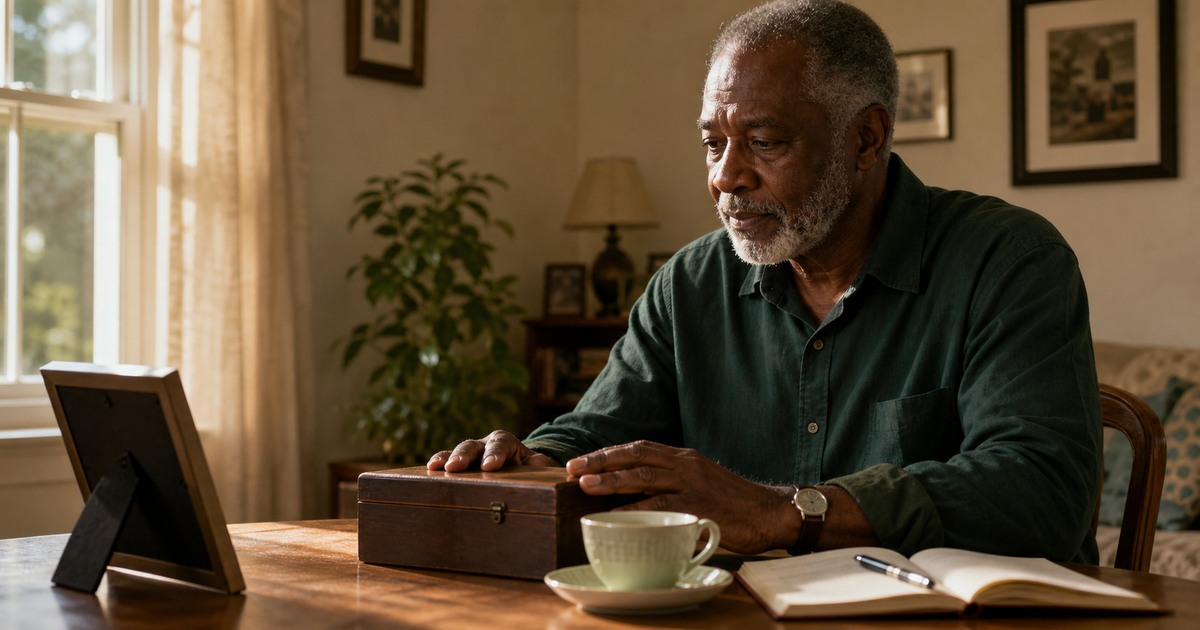
A reading may offer comfort, language, or a ritual moment after loss. It cannot prove contact, finish grief on command, or replace support for prolonged or dangerous distress.
Quick Guide
- Define closure as integrating a loss, not erasing love or memory.
- Keep spiritually meaningful messages separate from verifiable facts.
- Avoid readers who exploit grief with certainty, urgency, or repeated fees.
- Use supportive people and qualified grief care when functioning remains impaired.
Remember
Honor the relationship and what remains meaningful.
Reality
Separate confirmed facts from interpretation and hope.
Agency
Keep decisions, money, and boundaries in your hands.
Support
Use community and professional care when needed.
Closure Is Not a Door That Must Slam Shut
People often imagine closure as the moment grief ends. In practice, bereavement changes shape. You may accept that a death occurred while still missing the person, telling their stories, keeping an object, or wondering what remained unsaid. Research on continuing bonds recognizes that an inner relationship with someone who died can be common. Whether it helps depends on the person, context, prior relationship, and form the bond takes.
A psychic or mediumship reading can function as a structured time to remember. The benefit may come from attention, narrative, hope, permission to feel, or a personally spiritual interpretation. None of those possibilities proves that information came from the deceased. Respect for an experience and caution about its explanation can coexist.
What a Reading Can and Cannot Offer
| A reading may offer | It cannot responsibly guarantee |
|---|---|
| A ritual container for memory and emotion | Verified contact with a particular person |
| Prompts for unfinished conversations | A complete end to grief |
| Symbolic reassurance or perspective | Accurate medical, legal, or financial facts |
| A reason to discuss the loss with others | That therapy, medication, or grief support is unnecessary |
If you decide to book, review this site’s guide to finding the right psychic for your needs. Its evidence-aware discussion of past-life readings also demonstrates how spiritual interpretation can be meaningful without being treated as documented biography.
Before the Session: Protect a Tender Moment
- Choose a time when you will not need to drive or return immediately to demanding work.
- Set a fixed price and refuse add-on rituals, curse removal, or emergency purchases.
- Decide how much identifying information you want to share.
- Write your questions in open form: “What might help me honor this relationship?”
- Ask whether recording or notes are allowed.
- Tell a trusted person you may want support afterward.
Avoid feeding a reader with a long public history before the session if you want to evaluate specificity. At the same time, do not mistake a correct name or general detail for proof. Information can arise through cues, prior research, chance, common experiences, or interpretation.
After the Session: Use a Two-Column Review
In the first column, record exact statements and checkable details. In the second, record what the statements meant to you. This preserves both kinds of value without blending them. Verify factual claims independently. Do not make an irreversible decision because a reader says the deceased demands it.
If the session was comforting, choose a grounded continuation: make a memory album, cook a familiar meal, donate to a cause, visit a meaningful place, or tell a story to someone younger. These actions keep love connected with present life.
Ethical Red Flags Around Grief
Leave when a reader says the deceased is trapped unless you pay, threatens consequences if you stop, claims exclusive access, pressures secrecy, or repeatedly changes the price. Be cautious when broad statements become increasingly specific only after you supply details. A responsible practitioner admits uncertainty, accepts a no, and encourages appropriate outside help.
When Grief Needs More Than a Reading
Seek qualified help when grief remains intensely disabling, you cannot manage basic responsibilities, substance use is rising, sleep is severely disrupted, or you feel hopeless or unsafe. Psychotherapy can address grief, trauma, depression, anxiety, guilt, and functioning with trained care and a treatment plan. In an immediate crisis, contact local emergency services or a crisis line.
A reading can be one optional spiritual experience. It is not a test of how much you loved, and choosing not to have one does not leave a relationship unfinished. Closure is better understood as making room for the loss while continuing to live.
Key Takeaways
- Closure usually means integrating loss, not forgetting or ending every bond.
- A reading may provide symbolic comfort without proving after-death communication.
- Separate exact, verifiable statements from the personal meaning you draw from them.
- Grief exploitation includes urgency, fear, secrecy, curse claims, and escalating fees.
Frequently Asked Questions
1. Can a psychic give me closure?
A reading may support reflection or comfort, but no practitioner can guarantee closure or determine your grief timeline.
2. Is continuing to feel connected unhealthy?
Not necessarily. Continuing bonds can be common; their effect depends on whether they support life or intensify impairment.
3. Does a correct detail prove mediumship?
No single detail proves the source because cues, prior information, chance, and ordinary inference remain possible.
4. Should I tell the reader everything first?
Share what supports consent and safety, but you can limit background details if you want to evaluate specificity.
5. Can I record the session?
Ask permission and check local law; a recording helps you review exact wording later.
6. What questions are safest?
Ask open, reflective questions about remembrance, values, and your own next steps rather than commands from the deceased.
7. What is grief exploitation?
It is using fear, urgency, guilt, or claims of trapped spirits to pressure a grieving person into payment or dependency.
8. Can a medium replace grief counseling?
No. Mediumship is not licensed mental-health treatment unless the practitioner is separately qualified and acting within that role.
9. What if a message frightens me?
Pause contact, discuss it with someone trustworthy, and seek professional support if distress persists.
10. Should I make decisions from a reading?
Use readings as reflection only; verify facts and delay irreversible medical, legal, financial, or relationship decisions.
11. Is it okay if the reading does not resonate?
Yes. You do not have to force meaning, reinterpret misses, or buy another session.
12. Can I seek a reading soon after death?
You can choose your timing, but acute grief may increase vulnerability; use a fixed budget and support person.
13. What is a continuing bond?
It is an ongoing inner relationship through memories, values, rituals, objects, stories, or a felt connection.
14. When should I seek grief care?
Seek care when distress is persistent, disabling, dangerous, or accompanied by severe depression, trauma symptoms, or substance misuse.
15. Do I need a psychic to say goodbye?
No. Letters, rituals, conversations, art, therapy, and community remembrance can all support unfinished feelings.